
Lafourche Parish Arrest Records and Charges
Arrest records are created on the law-enforcement side. In Lafourche Parish, LPSO custody and warrant tools can show public booking or warrant information, including name, race, sex, date of birth format, arrest date, cell block, and hold reasons when the portal exposes them. Booking photos should not be expected in the current public roster because LPSO portal text says photos were temporarily removed after Act 494 restricted booking-photo release.
Court charge records begin when the prosecutor files formal charges. The Lafourche Parish District Attorney is the prosecuting authority for felony and many misdemeanor matters in the 17th JDC system. The DA's filing can differ from the initial arrest label. The full case file, with plea, disposition, sentence, and expungement activity, belongs in Lafourche Parish criminal court records.
The manifest includes the Lafourche Parish Correctional Complex page because custody information often starts the arrest-record search.
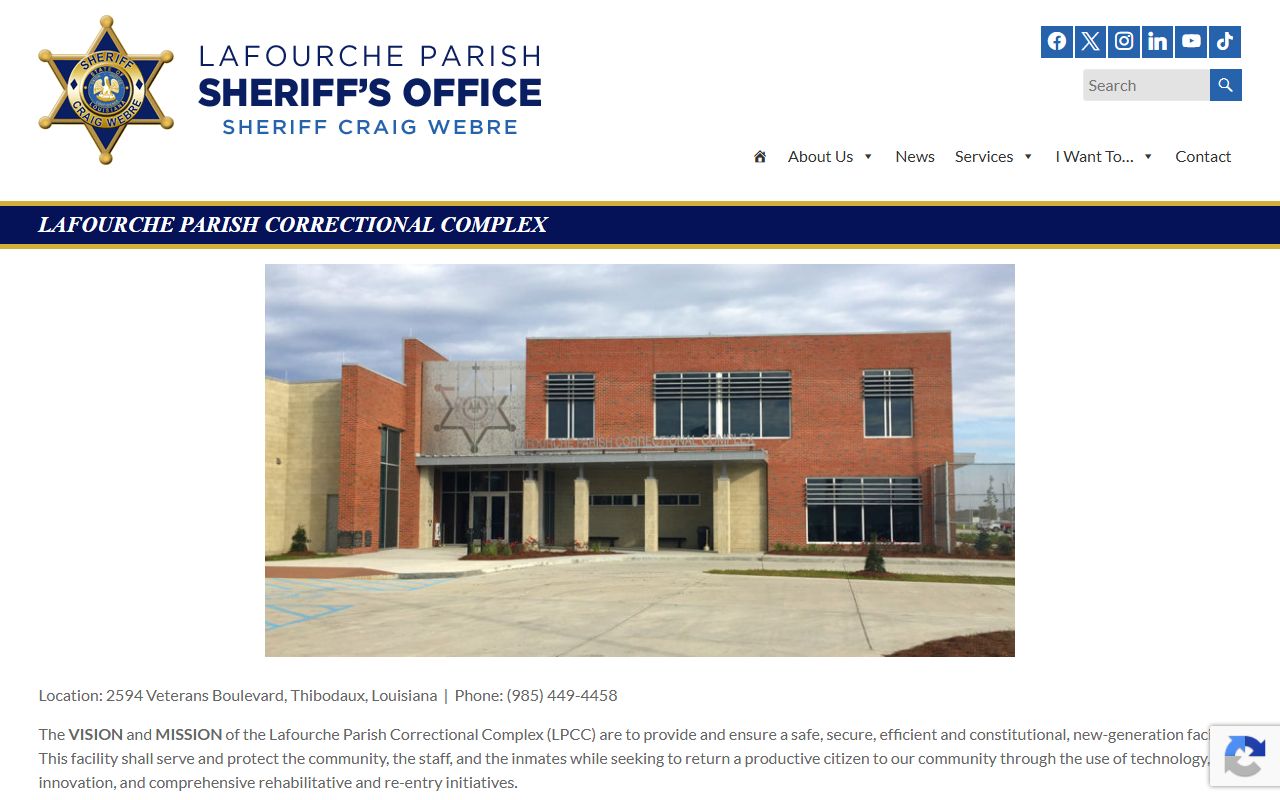
LPCC is the parish-wide custody facility, but a jail record is still separate from the court charge filed by the prosecutor.
Find Lafourche Parish Arrest Records
Use a channel that matches the question. Current custody is searched through the LPSO Zuercher inmate roster. Active warrant information is searched through the LPSO Zuercher warrant portal. Formal charges and charge status are searched through Clerk Connect criminal inquiry or requested from the Clerk Criminal Department when the online record is not enough.
The manifest source for the Zuercher inmate portal initialization data supports the custody and hold-reason side of Lafourche Parish arrest records.
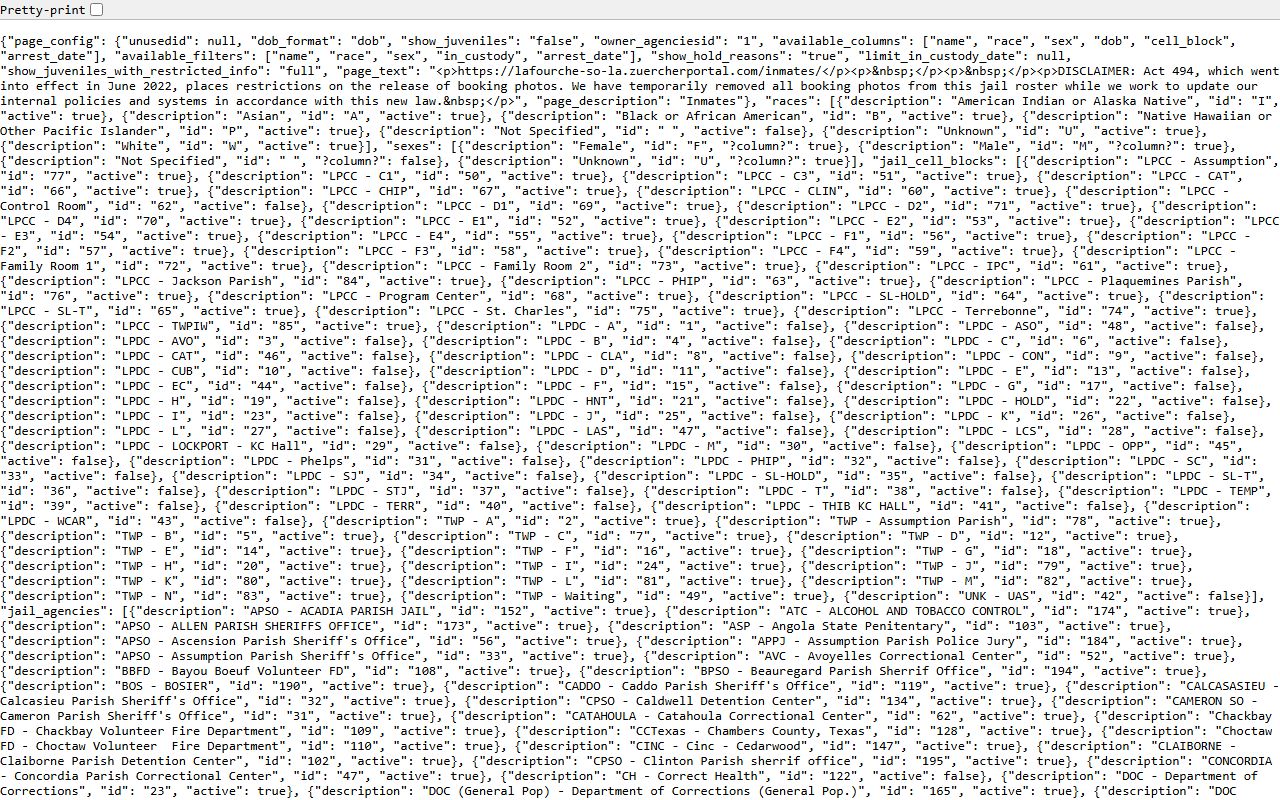
The roster can point to custody and hold reasons, but it does not replace the prosecutor-filed charge or the court's final disposition.
- Check the LPSO inmate roster if the question is whether the person is in custody now.
- Check the LPSO active warrant portal if the issue may involve an outstanding warrant.
- Use Clerk Connect criminal inquiry to find formal charges filed in the court record.
- Read each charge separately because one arrest can lead to several counts with different outcomes.
- Request Clerk copies or call the criminal docket line when the online record is missing, restricted, or unclear.
Charges After Arrest Documents
Charges after arrest are placed into court through a charging document. The research identifies criminal case files that can include a bill of information or indictment, minutes, charge records, pleas, motions, orders, bond records, disposition, sentencing, and costs. Louisiana practice may use several charging-document types, and the source of the document matters when reading the record.
| Document | Who files it | How it fits the court charge record |
|---|---|---|
| Complaint | Officer or prosecutor, depending on court and case posture | Can start or support a criminal accusation, especially in lower-level matters. |
| Bill of information | Prosecutor | Common charging document used by the District Attorney to file formal charges. |
| Indictment | Grand jury | Used for serious charges where grand-jury action is required or chosen. |
The Lafourche Parish District Attorney's Office handles charge filing, plea negotiations, diversion where available, victim services, and expungement fee processing. The 17th JDC contact page lists District Attorney Kristine Russell and phone 985-447-2003.
Lafourche Parish Charge Status
Charge status can change after the first court filing. A charge can be amended, reduced, added, dismissed, resolved by plea, tried to verdict, or marked nolle prosequi if the prosecutor declines to proceed. The status shown in a court record is more useful than the booking label because it reflects what happened in court.
| Status | What It Means |
|---|---|
| Pending | The charge remains open and has not reached final disposition. |
| Amended | The prosecutor changed the charge, count, statutory basis, or severity level. |
| Reduced | The charge moved to a lesser offense, often through plea negotiation or court action. |
| Dismissed | The court ended the charge without a conviction on that count. |
| Nolle prosequi | The prosecutor chose not to continue prosecution on that charge. |
| Convicted | The charge ended with a guilty plea or finding of guilt. |
Charges vs Convictions
A charge is an accusation. A conviction is a final result based on a guilty plea or finding of guilt. Lafourche Parish arrest records and court charges should never be read as a conviction unless the disposition shows that result. A single arrest can show a hold reason in the jail roster, a warrant charge in the sheriff portal, and a different final charge in the Clerk's criminal case record.
| Point | Charge | Conviction |
|---|---|---|
| Record stage | Filed after arrest or citation | Entered after plea or verdict |
| Meaning | Accusation that must still be resolved | Finding or plea of guilt |
| Where to verify | Charging document and docket entries | Disposition, judgment, sentence, and count-specific result |
| Common error | Treating a filed charge as proof of guilt | Assuming every original charge ended in conviction |
Note: Always read the final disposition before using a Lafourche Parish charge record as an outcome record.
Warrant Charges and Holds
Warrants can create another access path for charge information. LPSO publishes an active warrant search through Zuercher, and the portal requires search criteria. Visible warrant fields can include name, race, sex, date of birth or age, bond amount, charge, and comments when present. Bench warrants may also originate in the 17th JDC or in lower courts such as Thibodaux City Court, Lockport Mayor's Court, Golden Meadow Municipal or Mayor's Court, or justice courts.
The warrant portal initialization source is assigned to this page by the manifest.
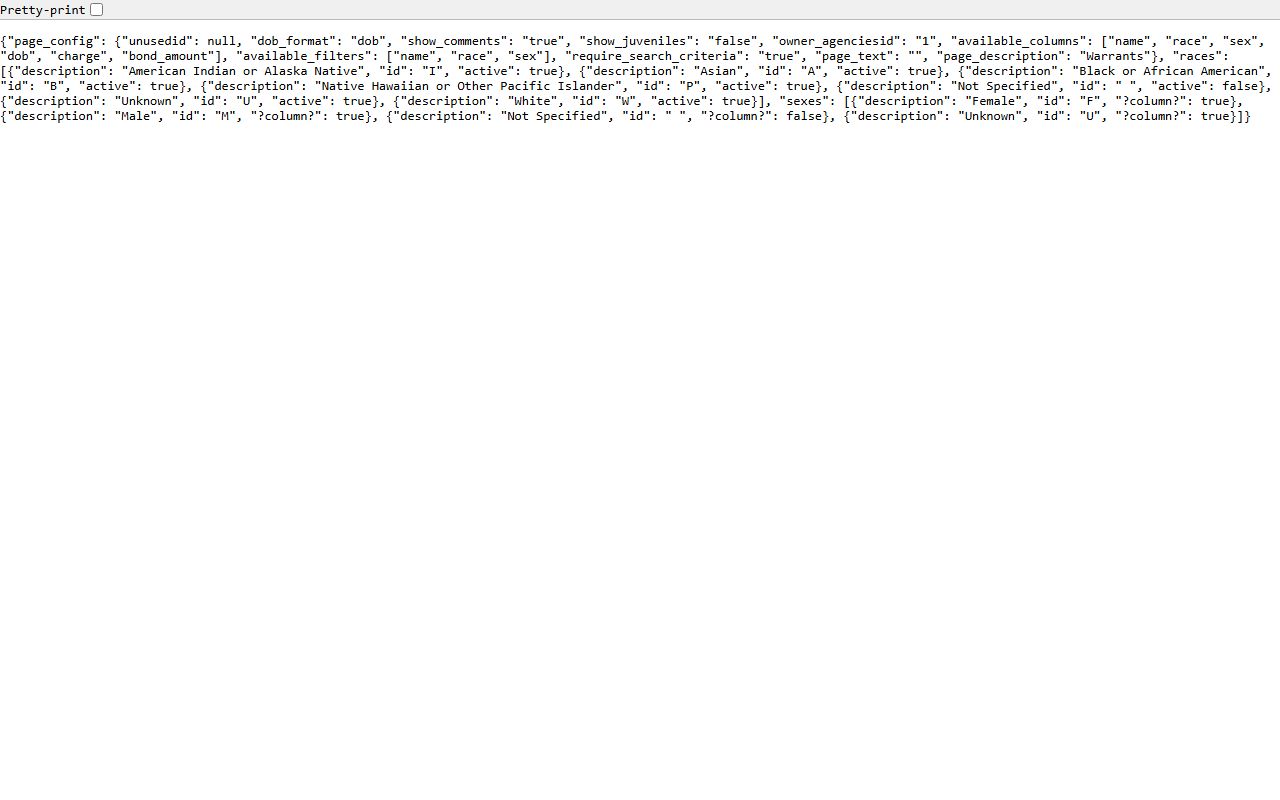
Warrant data can explain a hold or arrest path, but the court record is still needed to confirm the filed charge and later outcome.
Statewide Criminal Record Checks
Louisiana does not provide a single free statewide public district-court case search equivalent to a unified county court portal. Criminal-history and specialized law-enforcement records may be held by state agencies, and court records still need to be checked with the parish Clerk or the court that issued the case. Sex-offender registry records are a separate law-enforcement registry, not a complete list of all charges or arrests.
The manifest assigns the Louisiana State Police sex offender registry as a statewide specialized source.
Registry status is not the same as a full criminal case file, so local Clerk and court checks remain necessary for filed charges and dispositions.
Sealed or Expunged Charge Records
Charge records can become restricted. Juvenile charges, sealed court records, expunged matters, adoption-related records, mental-health-sensitive records, and personal identifiers are not general public search material. The Clerk criminal page lists expungement forms, states that staff cannot prepare the forms or give legal advice, and posts a payment split for standard expungement filings.
| Point | Sealed | Expunged |
|---|---|---|
| Public access | Hidden from ordinary inspection by law or order | Restricted from public disclosure after a court grants relief |
| Common records | Juvenile, protected, sensitive, or court-sealed files | Eligible arrests or convictions under Louisiana criminal procedure |
| Local filing path | Ask the Clerk or court what authority is required | Start with Criminal Department forms and the court filing process |
| Agency access | May remain available to authorized agencies | May remain available to agencies as Louisiana law allows |
Lafourche Parish Charge Access Limits
Louisiana public-record statutes support inspection and copies of public records, including non-sealed court records, but they do not remove court-specific confidentiality rules. La. R.S. 44:1 defines public records, La. R.S. 44:31 gives adults access rights unless another law restricts access, and La. R.S. 44:32 governs custodian copy duties and procedures.
LPSO is a separate custodian for sheriff records, so booking, warrant, crash, and law-enforcement records may require the LPSO public-records request path. Clerk court files use Clerk channels. The LPSO commissary source in the manifest is not a court-charge source, but it helps identify jail custody and money channels when arrest records lead to an active inmate search.
Commissary and custody details can confirm a person is in the jail system, while the Clerk record confirms court charges and outcomes.
The manifest also assigns the U.S. Attorney's Office for the Eastern District of Louisiana.
Federal charges are not filed by the Lafourche Parish District Attorney, so federal prosecution records must be checked through federal court and federal agency channels.